Up to EUR 100,000: Tax credit for investments by business angels
Since January 1, 2026, the Luxembourg start-up ecosystem has been offering founders and investors another very attractive geographical advantage, the Crédit d’impôt Start-up: a tax credit of up to EUR 100,000 for business angels and investors.(1)
What is a ‘tax credit’?
A tax credit directly reduces the income tax due (and not just the taxable income). It cannot be paid out and can only be claimed under the criteria explained in the article. Structurally, it allows for a reduction in future tax payments – liquidity that business angels and investors can then use in the following year(s).
For start-ups, this can be a powerful leverage to close angel tickets more quickly, as investors benefit from a predictable tax upside.
Subject to the eligibility criteria listed and explained in detail below, business angels and investors are able to receive 20% of their equity investments back as a tax credit as of this year. Where the credit exceeds the tax liability, the surplus remains available and may generally be carried forward to the following year.
Equity investments are capped to a tax credit of EUR 100,000 per tax year and person – investments above this annual maximum amount will not qualify for any tax benefit and cannot be carried forward to the following year.
Requirements for investors

Who?
Natural persons resident in Luxembourg and certain non-residents who are treated as residents (assimilation).

How?
Direct cash investment in newly issued, fully paid, registered shares – upon formation or through a capital increase.

Minimum holding period
3 years. Shares held via a tax-transparent vehicle are treated as equivalent to a direct holding in proportion to the share in that vehicle.

Excluded
Founders and employees of the start-up in the relevant year (funding logic: external angels).
Investment criteria

Minimum amount
EUR 10,000 per investor and start-up.

Maximum eligible amount
EUR 500,000 or 30% share in the start-up – investments above this amount or cap are permitted, but do not qualify for tax credits.

Calculation
Investment amount taking into account any premiums and disregarding investments without a corresponding issue of shares.

Start-up Cap
Max. EUR 1.5 million in eligible cumulative investments (across all eligible investors) per start-up.

Investment with an innovative character
Funds are intended to specifically promote innovation (more on this in the info box).
On the innovative character:
The parliamentary presentation stipulates, among other things, that the start-up should invest at least 15% in research and development (R&D) in order to ensure its innovative character. In addition, technical summaries on implementation emphasise that minimum personnel capacities (e.g., at least two full-time equivalent employees) and a confirmed R&D quota may also play a role.
Eligible start-ups

Legal form
Corporation or cooperative.
Tax status
Fully taxable in Luxembourg or in the EEA with a business establishment in Luxembourg.

Age
Not more than 5 years old.*

Number of employees
Less than 50 employees.*

Turnover or balance sheet total
Up to EUR 10 million.*

Group rating
In the case of group membership, age and size characteristics are checked at group level and must generally be confirmed.
Excluded business purposes
The subsidy explicitly excludes certain business purposes (selection):
- Law firms
- Audit / Revision / Accounting
- Companies whose main purpose is real estate (construction, development, trading, leasing, management, promotion, utilisation or sale of real estate/rights) or the holding of interests in such companies
- Venture capital companies (within the meaning of the SICAR Act)
- Companies created by merger or demerger (within the meaning of EU requirements)
- Companies that have distributed dividends or reduced their capital since their foundation (exception: capital reduction to cover losses)
* Cut-off date is the end of the relevant tax year for which the credit is applied for.
Here’s how you can prepare
As a business angel / investor
Plan the timing and tax profile
As the tax credit cannot be paid out, it is particularly worthwhile to use it if sufficient income tax will be payable in the future (with carry-forward if necessary).
Monitor your equity stake
Above 30%, any investment won’t result in a tax credit – this can be relevant in seed rounds.
Consider the holding period
Take into account the three-year holding period in your deal structure (exit rights, liquidation preferences, drag/tag, secondary).
Document the structure
Given that the criteria of ‘direct investment’ is critical and was discussed during the legislative process, it is essential to clearly document how you hold your investment.
For start-ups
Provide proof of innovation well in advance
If you need to provide evidence of your R&D ratio and minimum resources, prepare your reports and confirmations well in advance.
Cap table & funding rounds
The combination of a total threshold of EUR 1.5 million and an investor cap can influence the size of the funding round and the selection of investors.
Verify sector exemptions
Should your activity potentially fall within an exempted sector, it is advisable to clarify this prior to investor discussions.
Outlook
Luxembourg increasingly uses tax instruments to accelerate transformation and innovation – in addition to the new start-up credit, there are also modernised investment tax incentives for companies in the digital/green transition sector.
The new start-up tax credit can be a powerful lever for business angels: a 20% reduction of tax for qualifying equity investments is a clear signal in European comparison.
At the same time, the conditions (innovation criteria, holding period, direct investment, caps) are designed in such a way that structuring, documentation and timing play a decisive role. Anyone wishing to invest in 2026 should therefore ensure at term sheet stage the form of investment, cap table effects and documentation are in line with their tax objectives.
(1) Article 154quaterdecies of the Luxembourg Income Tax Act, introduced by the Law of December 19, 2025.
This article is for general information purposes only and does not constitute legal advice.
About
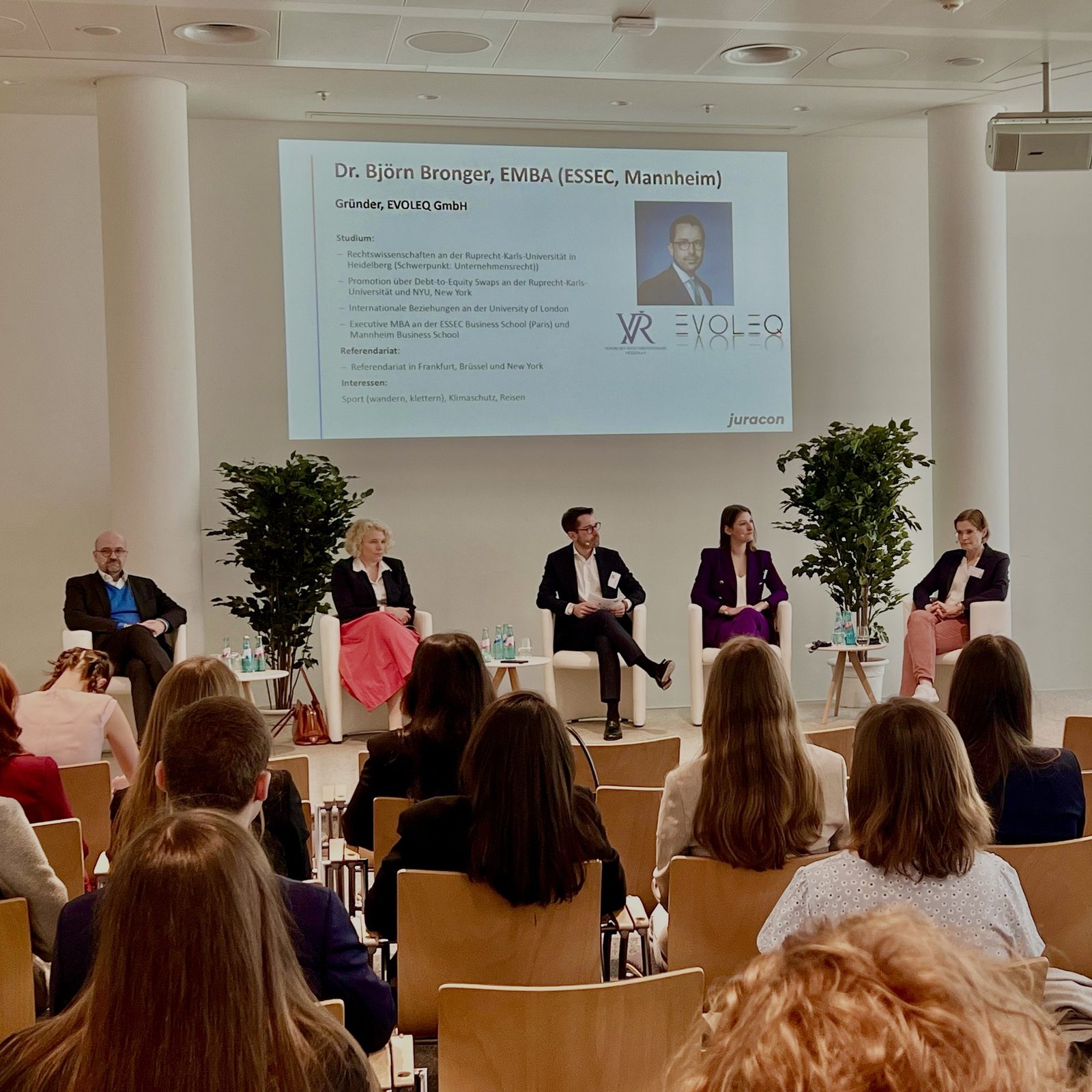
Dr. Björn Bronger, MBA, is a strategic adviser to start-ups and lawyer, as well as lecturer in entrepreneurship at the Luxembourg School of Business (LSB).
He advises founders, investors, private clients and family offices at the intersection of strategy, finance and law. Focus areas:
- Startups & Entrepreneurs (incorporation, financing rounds, ESOP, exit)
- Corporate Governance (governing bodies, directors’ duties, shareholder relations)
- Contracts (commercially effective, legally robust)
- Immigration & Residence (market entry, residence, citizenship)